RX-78-2 Gundam

Brief Description
The RX-78-2 Gundam was an experimental close-combat mobile suit developed by the Earth Federation Forces during the One Year War. It was one of the most advanced machines produced under the Federation's secret Operation V and was designed to give the Federation a mobile suit capable of directly challenging and surpassing the Principality of Zeon's machines.While the RX-78-2 became famous because of its pilot, Amuro Ray, the Gundam's real importance goes much further than its combat record. The machine served as a testbed for technologies that would later influence the Federation's mass-produced mobile suits, especially the RGM-79 GM.
Development Hisory
Once the initial design of the RX-78-1 Prototype Gundam was approved, development proceeded to the second stage, resulting in the creation of the second prototype in the series. The RX-78-2 Gundam was the second of three Gundam prototypes developed under Operation V (Victory) and carried over much of the technology tested on the RX-78-1 Prototype Gundam.
The project was led by engineer Tem Ray, who was secretly overseeing Project V at the Side 7 colony. Like the Prototype Gundam, the RX-78-2 also utilized a Core Fighter. However, improvements were made to the RX-78-2's Core Fighter. It was armed and housed the Gundam's Learning Computer, allowing valuable combat data to potentially be preserved even if the RX-78-2 itself was destroyed.
Like its predecessor, the RX-78-2 Gundam was an incredibly advanced mobile suit for its time. The Gundam made its combat debut on September 18, U.C. 0079, becoming one of the first mobile suits to bring firepower comparable to that of a battleship into actual mobile suit combat.
During the attack on Side 7, Tem Ray's teenage son, Amuro Ray, entered the Gundam and used it to defend the colony against Zeon forces. Soon afterward, Amuro and several other civilians were pressed into service aboard the EFF's new assault carrier, the White Base.
Zeon forces pursued the White Base and Gundam through space and across Earth, even as the Earth Federation began deploying its own mobile suits in greater numbers. As Amuro's piloting skills continued to improve, so did his latent Newtype abilities. Eventually, the Gundam itself began having difficulty keeping up with Amuro's increasingly fast reaction speeds.
To compensate, the Gundam received a field upgrade known as magnet coating, which reduced friction within its motors and joints and improved the machine's overall response time.
After fighting in numerous battles across Earth, the Gundam returned to space and participated in Operation Cembalo and Operation Star One, major Federation offensives against the Zeon space fortresses of Solomon and A Baoa Qu.
On December 31, U.C. 0079, the RX-78-2 was ultimately destroyed during the Battle of A Baoa Qu while fighting Char Aznable's Newtype-use MSN-02 Zeong. Although both mobile suits were destroyed, the fight between Amuro and Char continued on foot.
Despite its destruction, the RX-78-2 became the most famous mobile suit of the One Year War. Its technology, combat data, and reputation would influence Federation mobile suit development for years to come, while numerous successor machines would continue carrying the Gundam name for decades.
WEAPONS
The RX-78-2 Gundam carried a surprisingly diverse arsenal for a mobile suit developed in U.C. 0079. Although officially classified as a close-combat mobile suit, its equipment allowed it to fight effectively at close, medium, and longer ranges.
Its standard and optional armaments included the 60mm Vulcan Guns, Beam Rifle, Beam Sabers, Beam Javelin, Hyper Bazooka, Gundam Hammer, Hyper Hammer, and Super Napalm. It also carried a large shield that could be used defensively and, when necessary, offensively.
60mm Vulcan Guns
The RX-78-2 carried two 60mm Vulcan guns mounted inside its head.
These were the Gundam's permanently installed weapons and gave it something to fight with even if it lost all of its handheld equipment.
The Vulcans were not intended to replace the Beam Rifle as the Gundam's primary anti-mobile-suit weapon. Instead, they were useful against lightly armored vehicles, aircraft, missiles, sensors, and other smaller targets.
They could also be useful at very close range against enemy mobile suits. A concentrated burst could damage vulnerable areas such as a mobile suit's head, cameras, sensors, or exposed equipment, and enough sustained close-range fire could even critically damage a Zaku II.
The biggest advantage of the Vulcans was practicality. Amuro did not have to waste Beam Rifle energy or a Hyper Bazooka round on something that could be handled by the smaller weapons.
BOWA-XBR-M-79-07G Beam Rifle
The Beam Rifle was the RX-78-2's primary ranged weapon and one of the most important technologies introduced by the Gundam program.
At the beginning of the One Year War, most mobile suits still relied on weapons such as machine guns and bazookas. The RX-78-2, however, could carry a compact beam weapon powerful enough to give a single mobile suit firepower comparable to a battleship's beam cannon.
This was possible because of E-Cap technology.
Instead of requiring the mobile suit to generate and compress all of the Minovsky particles needed for every shot, the rifle carried pre-charged energy that could be released when fired.
For U.C. 0079, this was an enormous technological advantage.
A successful Beam Rifle hit could destroy or severely damage most standard mobile suits that the Gundam encountered.
The rifle also included its own targeting sensor and worked with the Gundam's fire-control system to improve accuracy.
However, the Beam Rifle had one major limitation: ammunition was essentially limited by the amount of energy stored inside its E-Cap. (Roughly 12-16 shots)
Unlike later replaceable E-Pac beam rifles, the RX-78-2 could not simply eject an empty energy magazine and insert another one during battle. Once the rifle's stored energy was exhausted, it had to be recharged.
The Beam Rifle was incredibly powerful, but Amuro still had to manage his shots.
Beam Sabers
For close-quarters combat, the Gundam carried two Beam Sabers, normally stored in recharge racks on its backpack.
Each saber was rated at approximately 0.38 MW.
When activated, the weapon formed a blade using high-energy Minovsky particles contained by an I-field.
Rather than trying to smash through armor through physical force, the Beam Saber could use its intense energy to cut through most conventional mobile suit armor.
This gave the Gundam a major close-combat advantage.
The RX-78-2 could carry one Beam Saber while leaving the second on the backpack as a spare, or it could use both Beam Sabers simultaneously.
This also meant the Gundam still possessed extremely dangerous offensive capability if it lost or depleted its Beam Rifle.
Against a machine such as a Zaku II, allowing the Gundam to enter Beam Saber range could quickly become fatal.
Beam Javelin
The Beam Javelin expanded upon the Gundam's Beam Saber technology.
The RX-78-2 could configure its beam weapon into a longer spear-like form, giving it significantly more reach than a normal Beam Saber.
Instead of requiring the Gundam to move directly within sword-fighting distance, the Beam Javelin allowed Amuro to stab or strike an opponent from farther away.
The weapon could also be thrown, giving the Gundam another unconventional ranged attack if necessary.
The main advantage was therefore reach.
A Beam Saber was excellent for extremely close combat, while the Beam Javelin gave the RX-78-2 more distance between itself and its opponent without sacrificing the destructive capabilities of a beam melee weapon.
BLASH-XHB-L-03/N-STD 380mm Hyper Bazooka
When beam weaponry was not ideal, the Gundam could carry the 380mm Hyper Bazooka.
This was a large handheld rocket launcher designed to deliver considerably more explosive force than a standard mobile suit machine gun.
The Hyper Bazooka as using a five-round magazine with an additional round loaded in the chamber, giving it six immediately available shots.
Unlike the Beam Rifle, the Hyper Bazooka relied on conventional explosive ammunition.
Explosive rounds could damage multiple targets through their blast, attack structures and fortifications, and provide heavy firepower against larger targets such as warships.
Used primarily as an anti-ship weapon, although it was also very effective against mobile suits and other battlefield targets.
The RX-78-2 could even operate with two Hyper Bazookas under some equipment configurations, greatly increasing the amount of conventional firepower it could bring into battle.
Once those rockets were gone, the weapon was essentially dead weight until it could be reloaded.
But having the Hyper Bazooka alongside the Beam Rifle meant the Gundam was not completely dependent on beam weaponry.
Gundam Hammer
The Gundam Hammer is probably the strangest weapon in the RX-78-2's arsenal.
At its most basic level, it was an enormous spiked metal ball attached to a long chain.
It sounds primitive compared with Beam Rifles and Beam Sabers, but the concept was simple: use the Gundam's size and strength to deliver an enormous amount of physical force into an enemy mobile suit.
The weapon could be swung around the Gundam and smashed into an opponent, or the ball could be thrown while remaining connected through the chain.
That gave it greater reach than a normal handheld melee weapon.
The Gundam Hammer also had one useful advantage over beam weapons:
It did not rely on beam energy.
As long as the weapon remained physically intact, it could continue being used.
It therefore provided the Gundam with a simple but extremely destructive physical weapon when beam weapons were unavailable or unnecessary.
Hyper Hammer
The Hyper Hammer was an improved version of the Gundam Hammer.
The basic design remained the same: a massive spiked ball attached to a chain.
However, the Hyper Hammer added thrusters to the hammer itself.
Those thrusters could accelerate the weapon while it was being swung, increasing the force of an impact. They could also help alter the hammer's direction before it struck its target.
This made the Hyper Hammer considerably more controllable and potentially more destructive than simply relying on the Gundam to swing a large metal ball.
Essentially, the Gundam Hammer relied almost entirely on physical momentum.
The Hyper Hammer added propulsion to that momentum.
Super Napalm
The Super Napalm was one of the RX-78-2's least commonly used weapons.
It was an optional four-tube launcher associated with the Beam Rifle that fired powerful napalm rounds designed to burn a large area.
Unlike most of the Gundam's weapons, the Super Napalm was not primarily intended for normal mobile-suit duels.
Its strength was destruction over a wider area.
Its most famous use occurred very early in Mobile Suit Gundam, when Amuro used it at Side 7 to destroy remaining Operation V mobile suit components so that Zeon could not recover the Federation's technology.
Because it appeared only briefly, the Super Napalm is sometimes left out of general RX-78-2 weapon lists.
RX-M-Sh-008/S-01025 Shield
Although technically defensive equipment rather than a conventional weapon, the Gundam's shield deserves to be included when discussing its combat equipment.
The shield could be carried by hand or attached to the Gundam's forearm, allowing Amuro to protect the mobile suit's body from incoming attacks.
When it was not needed, it could also be stored on the Gundam's backpack.
The shield was particularly important because even though Luna Titanium made the Gundam extremely durable, there was no reason to allow the main body to absorb damage unnecessarily.
It could also be used aggressively.
At close range, the Gundam could use the shield to strike an enemy, push an opponent away, or even throw it as an improvised weapon.
So although the shield's primary purpose was protection, Amuro's fighting style occasionally turned it into another offensive tool.
ARMOR
Luna Titanium (later known as Gundarium Alloy)
The RX-78-2 Gundam was protected by Luna Titanium Alloy, a lightweight and extremely durable material developed by the Earth Federation for the RX-78 series. Federation engineers wanted an armor material that was stronger and lighter than conventional alloys while still allowing the Gundam to maintain its high mobility. After the One Year War, Luna Titanium was renamed Gundarium Alloy in honor of the Gundam and its achievements during the conflict.
During the early stages of the One Year War, Luna Titanium gave the Gundam an enormous defensive advantage. Standard 90mm and 120mm machine-gun rounds used by Zeon mobile suits had very little effect against the armor, and even physical attacks such as blunt-force strikes and Heat Hawks struggled to cause serious damage. This allowed the RX-78-2 to survive punishment that could have easily disabled or destroyed many other mobile suits of the time.
Its protection was not unlimited, however. Larger explosive weapons could still damage the Gundam, and Luna Titanium had considerably less resistance against mega-particle beam weapons. This weakness became increasingly important later in the war as Zeon began fielding beam-equipped mobile suits. During the Gundam's final battle against the MSN-02 Zeong, the Zeong's Mega Particle Cannons were able to penetrate the RX-78-2's armor and cause devastating damage.
Another major advantage of Luna Titanium was its low weight. Despite the Gundam being roughly a meter taller than the Zaku II, the smaller Zaku was actually slightly heavier. This allowed the RX-78-2 to combine excellent armor protection with strong mobility rather than sacrificing performance for additional protection.
The biggest disadvantages were cost and maintenance. Luna Titanium required rare materials and was difficult to manufacture, making it impractical for widespread use on mass-production mobile suits such as the RGM-79 GM. Its durability also created problems for Federation mechanics, since damaged armor could not easily be cut or welded using ordinary field equipment. Specialized facilities such as those aboard the White Base, at Jaburo, and at Luna II were needed to properly repair the V Project prototypes.
Overall, Luna Titanium gave the RX-78-2 some of the strongest physical protection available during U.C. 0079. Against the conventional projectile weapons that dominated the early One Year War, the Gundam was extraordinarily difficult to destroy. Its main weaknesses were the growing threat of beam weaponry and the high cost and difficulty involved in producing and maintaining such advanced armor.
PERFORMANCE/MOBILITY
Powering the Gundam was a Minovsky-type ultracompact fusion reactor rated at 1,380 kW. For propulsion, the RX-78-2 used two main rocket thrusters rated at 24,000 kg of thrust each, along with four smaller thrusters rated at 1,870 kg each. These gave the Gundam the thrust needed to maneuver effectively in space while still supporting its relatively heavy combat equipment.
One advantage the RX-78-2 had was its relatively low weight. Despite its strong protection, the use of lightweight Luna Titanium Alloy helped keep its empty weight at approximately 43.4 metric tons, with a maximum operating weight of around 60 metric tons. The Gundam Wiki specifically describes its frame as lighter than those of Zeon's mass-produced mobile suits while still being considerably more durable.
This combination of a lightweight structure and strong propulsion gave the Gundam a listed maximum acceleration of approximately 0.93 G.
The two sources differ slightly when it comes to the Gundam's maximum ground speed. MAHQ lists a maximum running speed of 205 km/h, while the Gundam Wiki lists 165 km/h. Because of this difference, the exact maximum ground speed varies depending on the source being used.
Originally, the RX-78-2 could perform a 180-degree turn in approximately 1.5 seconds. For much of the One Year War, this level of performance was more than capable of keeping up with Amuro Ray.
But as Amuro gained combat experience and his Newtype abilities continued to develop, his reaction speed eventually began exceeding what the Gundam itself could physically respond to.
In other words, the RX-78-2 had reached a point where the pilot was becoming faster than the machine.
The Gundam's joints and motors could not respond quickly enough to Amuro's increasingly rapid control inputs, and continued high-performance operation began placing additional strain on the machine.
For a mobile suit developed in UC 0079, the RX-78-2 possessed exceptional speed, agility, balance, and reaction time. Its powerful reactor and responsive control system allowed it to outperform most early Zeon mobile suits on Earth and in space.
As Amuro Ray’s abilities improved, the Gundam eventually struggled to respond quickly enough to his commands. Magnetic coating was applied to its joints late in the war, reducing friction and improving its reaction speed. This demonstrated that the design could be upgraded, although it also showed that the original machine had begun approaching its performance limits.
Magnet Coating Upgrade
To solve this problem, the RX-78-2 received a late-war field upgrade known as Magnet Coating.
The process applied a special treatment to the Gundam's joints and field motors, reducing friction and allowing them to respond more quickly to the pilot's commands.
The technology had previously been tested on the RX-78-3 G-3 Gundam before being applied to Amuro's RX-78-2.
The improvement was significant.
Before Magnet Coating:
180-degree turn time — 1.5 seconds
After Magnet Coating:
180-degree turn time — 1.1 seconds
That represents roughly a 27% improvement in directional response.
VERSATILITY
Versatility was one of the RX-78-2 Gundam’s greatest strengths. Although officially classified as a prototype close-combat mobile suit, it was capable of performing far more than close-range engagements. The Gundam could fight enemy mobile suits, attack warships, defend the White Base, assault fortified positions, and operate as both a ground and space-combat unit.
The RX-78-2 could change its combat role by switching weapons. Its beam rifle provided powerful medium-range firepower, while its beam sabers and beam javelin allowed it to engage opponents at close range. The Hyper Bazooka gave the Gundam a weapon for attacking heavily armored targets, warships, and fortifications. Its Gundam Hammer and Hyper Hammer offered powerful physical alternatives, while the head-mounted Vulcan guns could be used against lightly armored targets, missiles, personnel, and small vehicles. Its shield could also be carried on the arm or stored on the backpack when it was not needed.
The Gundam was equally adaptable to different environments. It fought inside colonies, across Earth’s deserts and cities, in mountainous terrain, underwater, and throughout space. It even possessed limited independent atmospheric-reentry capability. Although the RX-78-2 was not specially designed for underwater combat or long-distance atmospheric flight, it could still function in those environments when the mission demanded it.
Another major source of versatility was the Core Block System. The FF-X7 Core Fighter transformed into the Gundam’s central Core Block and connected the upper and lower sections of the mobile suit. If the Gundam became too heavily damaged, the pilot could escape in the Core Fighter while preserving valuable combat data. The Core Fighter could also operate independently as a small aerospace fighter, giving the system a function beyond simply serving as the Gundam’s cockpit.
The modular construction also allowed the RX-78-2 to combine with support equipment. In the television continuity, it could work with the G-Fighter to form several configurations, including the G-Armor, G-Bull, and G-Sky. These combinations improved transportation, atmospheric mobility, protection, and firepower. In the movie continuity, the Core Booster performed a similar support role by transforming the Core Fighter into a faster and more heavily armed space fighter.
Most importantly, the RX-78-2 could be adapted without changing its basic frame. Its weapons, support systems, and equipment could be selected according to the mission. This allowed one mobile suit to perform jobs that might otherwise require several specialized machines.
COST-EFFECTIVENESS
The RX-78-2 Gundam was extraordinarily powerful, but it was not economical enough for mass production. It was a prototype built with expensive materials, advanced technology, and specialized components that were difficult to manufacture and replace during the One Year War.
Its Luna Titanium armor provided outstanding protection but was considerably more expensive than the materials used by ordinary Federation mobile suits. The Gundam also carried a powerful beam rifle, two beam sabers, an advanced learning computer, and the complicated Core Block System. These features improved its combat effectiveness and pilot survivability, but they also increased its production and maintenance costs.
Repairing the RX-78-2 could be difficult because replacement parts were limited. The White Base crew could not rely on a large supply network of identical Gundams. Damaged components had to be repaired aboard the ship, replaced with available Operation V parts, or maintained by technicians working with an experimental machine. Losing the Gundam would also mean losing a valuable collection of advanced technology.
The RX-78-2 was therefore unsuitable for widespread deployment. Instead of mass-producing the Gundam exactly as designed, the Earth Federation developed the RGM-79 GM. The GM removed or simplified several expensive features while retaining enough of the Gundam’s basic technology to fight Zeon’s mobile suits. Official Gundam material identifies the GM as the Earth Federation’s mass-produced mobile suit.
However, the RX-78-2’s strategic value was much greater than its production cost might suggest. Its learning computer collected valuable information from Amuro Ray’s battles. That combat data helped the Federation improve its mobile-suit technology, training, and mass-production forces. The Gundam also destroyed numerous enemy mobile suits, mobile armors, warships, and high-value Zeon weapons throughout the war.
The RX-78-2 was not cost-effective as a machine intended for mass production, but it was extremely successful as a prototype. Its purpose was not simply to become another frontline unit. It tested new technology, gathered combat data, and provided the foundation for more affordable Federation mobile suits.
GALLERY
 |  BOWA*XBR-M-79-07G Beam Rifle |  380mm hyper bazooka |
|---|---|---|
 RX*M-Sh-008/S-01025 Shield |  Hyper Hammer |  BLASH*XHB-L-03/N-STD Hyper Bazooka w/other weapons |
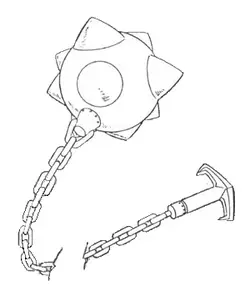 Gundam Hammer |  Beam Javelin |  Incomplete head |
 MSV Colors |  Illustration based on MG RX-78-2 Gundam |  Early Head design by Kunio Okawara |
 Early design by Kunio Okawara |  Early design by Kunio Okawara |  Early design by Kunio Okawara |